
Beyond TAP: Filling the Financial Gaps Transitioning Service Members Often Miss
Key message: TAP provides an essential foundation, but transition success often depends on the financial details servicemembers do not discover until after they leave active duty. Thinking “Beyond TAP” helps identify those gaps early—before they become costly surprises.
Transition Requires More Than a Budget
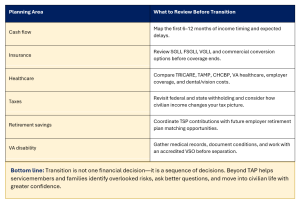
Many servicemembers spend months preparing for a civilian career but underestimate how dramatically their financial landscape can change. Retirement pay, VA disability compensation, and civilian wages may arrive on different schedules. A family that is used to regular active-duty pay can suddenly face once-a-month retirement pay, once-a-month VA compensation, and biweekly civilian pay. Understanding when income will begin—and building enough savings to bridge delays—can help reduce stress during the first months after transition.
Taxes may also shift after leaving active duty. Retirees and veterans may lose certain tax advantages they had while serving and may find themselves in higher tax brackets once civilian employment income is added to retirement pay. In those higher-earning years, employer-sponsored retirement plans and thoughtful withholding adjustments can become important planning tools.
Protecting What Matters Most
Life insurance is one of the most common transition blind spots. Many servicemembers assume they can easily replace Servicemembers’ Group Life Insurance (SGLI) after separation, but coverage can become more expensive with age or health changes. Members and spouses should understand conversion windows for SGLI and Family SGLI, compare Veterans’ Group Life Insurance (VGLI) with commercial options, and avoid leaving their families without protection during the transition period.
Encourage servicemembers to make these decisions before separation, when they still have time to compare options, ask questions, and avoid rushed choices. It is important to do an accurate needs analysis as well.
Healthcare Costs Do Not Disappear
Healthcare planning can be one of the most expensive—and misunderstood—parts of military transition. Separating members may be eligible for the Transitional Assistance Management Program (TAMP) if eligibility requirements are met, and some may consider the Continued Health Care Benefit Program (CHCBP). Retirees need to understand TRICARE enrollment fees, copays, catastrophic caps, and separate dental and vision costs. National Guard and Reserve members may face additional choices depending on their status.
VA healthcare is also separate from VA disability compensation. Priority groups, copays, and eligibility rules matter. Families should understand the difference between TRICARE, VA healthcare, CHAMPVA, employer coverage, and marketplace options before the final out-processing appointment.
Make Informed Decisions About Leave, Savings, and Homeownership
Selling back leave may provide immediate funds, but the payment is limited to basic pay and is taxable. Members who take terminal leave may continue receiving allowances such as BAH and BAS during the leave period. The financially best decision depends on timing, job start dates, relocation needs, and cash-flow priorities.
Retirement savings decisions also deserve a second look. A member who maxes out TSP before leaving service may unintentionally reduce the opportunity to receive a new employer match later in the year. Higher post-service income may also affect Traditional IRA deductions or Roth IRA eligibility, making tax planning especially valuable.
For those purchasing a home near transition, VA home loan underwriting may require proof that income is stable, reliable, and likely to continue. A valid civilian job offer, anticipated income, or documentation related to continued service can make a difference, depending on the lender and circumstances. Timing also matters with regards to home purchases with a VA Home Loan Guarantee program. If a servicemember closes on a home BEFORE the effective date of their VA disability claim, they cannot get the funding fee refunded if their combined rating is at least 10%.
Set Realistic Expectations for VA Disability Claims
One of the strongest messages in Beyond TAP is simple: do not build a transition budget that depends on receiving VA disability compensation immediately. Even when using the Benefits Delivery at Discharge (BDD) process, a decision is not guaranteed by a specific date. Families should plan for the possibility that compensation may take months to begin.
Servicemembers should obtain and review their medical records, document ongoing conditions, and work with an accredited Veterans Service Organization (VSO). A successful claim generally depends on evidence of a current disabling condition, documentation, and a connection to military service. The time to address medical concerns is before leaving service—not after.
Transition Planning Checklist
Questions or comments? Please reach out to Heather Walrath, AFC, MQFP on LinkedIn or heather.h.walrath@gmail.com
If you need help planning your transition, the MQFPs listed here can help you with that.